Buying a Campervan in New Zealand: The Ultimate Guide
Buying a campervan in New Zealand is not as complicated as you might think, and it can potentially offer you many benefits!
New Zealand has been fully open to tourists again for a few years now, and the number of international visitors is still increasing. Consequently, the familiar image of campers and campervans has returned to the roads, from Cape Reinga in the north to the deep south of the South Island. We traveled the islands for a total of seven months in 2018 and 2023, and we can confirm: the campervan culture is more vibrant than ever!
If you want to travel for several months, buying a campervan in New Zealand is often much cheaper than renting. While rental prices have risen significantly since the pandemic, you can still buy a reliable vehicle for a reasonable price. However, buying a vehicle in a foreign country is always an exciting and somewhat daunting experience. What should you pay attention to? Which legal steps are non-negotiable? In this extensive guide, we share every detail, tip, and recommendation based on our own 7-month “Booming Journey.”
Determining Your Budget and Understanding the Total Costs
Before you even start scrolling through listings, you must have a crystal-clear understanding of your budget. In fact, your budget determines not just the car you drive, but the lifestyle you will have on the road.
The Initial Purchase Price
Vans and campervans in New Zealand can range from a few thousand to tens of thousands of New Zealand Dollars (NZD).
- The Budget Range ($3,000 – $10,000): Usually older vans (1990s-early 2000s) with high mileage. These often require more maintenance but are great for short trips.
- The Mid-Range ($10,000 – $20,000): This is where you may find reliable Toyota Hiaces or newer Nissan Vanettes. Our Toyota Hiace fell into this category.
- The High-End ($25,000+): Modern motorhomes or professionally converted late-model vans with low mileage.
The Real Math: Buying vs. Renting
Many travelers wonder if the effort of buying is worth it. Let’s look at the numbers. During the peak summer season, a decent campervan rental can easily cost $200 to $300 NZD per day. If you stay for 100 days, you’ve spent $20,000 to $30,000 on a rental money you will never see again. In our case, we purchased our Toyota Hiace for $16,000. After seven months of travel, we sold it for $18,000. Consequently, even after paying for insurance and a few small repairs, we essentially traveled for “free” regarding the vehicle costs. This is a common success story in New Zealand, provided you buy a popular model and maintain it well.
Don't Forget the Hidden Costs
When buying a campervan in New Zealand, you must account for:
- Maintenance Buffer: Always keep at least $1,500 NZD aside for unexpected repairs (tires, brakes, or battery issues).
- Insurance: Depending on your age and the vehicle, expect to pay $600 – $1,000 NZD per year for full coverage.
- Road User Charges (RUC): If you buy a diesel, this is a recurring cost (approx. $80 per 1,000 km).
- Administrative Fees: Changing ownership is cheap ($9), but it’s part of the process.
Choosing the Right Type of Campervan: Requirements and Wishes
The “perfect” van doesn’t exist; there is only the van that is perfect for your specific journey. Therefore, you need to carefully prioritize your practical requirements versus your personal wishes. During our seven months on the road, we saw everything from tiny cars to massive motorhomes. Here is what you need to consider to make the right choice.
Make, Type, and Year of Manufacture
When looking at the market, you will notice that certain brands dominate the New Zealand roads.
Popular Makes: Toyota is by far the most popular brand (especially the Toyota Hiace and Toyota Estima), followed by Nissan (Nissan Vanette or Serena), Mazda (Mazda MPV or Bongo), and Mitsubishi.
Why choose a popular make? Parts for a Toyota are available in every small town in New Zealand. If you buy an ‘exotic’ European brand, repairs can become very expensive and time-consuming.
The Year of Manufacture: Most backpacker vans are between 15 and 25 years old (models from 2000 to 2010 are very common). In fact, a well-maintained 2005 Toyota Hiace with 300,000 km can often be a safer bet than a newer van from a less reliable brand. Don’t let the high mileage scare you immediately; in New Zealand, these engines are built to last if serviced regularly.
Self-Contained (SC) vs. Non Self-Contained
This is perhaps the most critical decision you will make.
Self-Contained: To be certified nowadays (check here!), your van must have a toilet (portable or fixed), fresh water storage, waste water storage, and a sink. The main advantage is that you have access to numerous “Freedom Camping” sites and cheaper DOC campgrounds.
Non Self-Contained: You are restricted to commercial holiday parks or DOC sites with full facilities.
Please note: The New Zealand government has recently overhauled the Self-Contained regulations. As of 2025, the requirements for toilets have become much stricter (the new “Green Warrant”). As a result, many older vans are losing their status. Always verify if the van meets the current legal standards before you pay a premium for that sticker.
Mechanical Preferences: Petrol or Diesel?
Petrol: Petrol engines are common in smaller vans like the Toyota Estima. You simply pay the price at the pump, which is higher per liter than diesel, but there are no extra taxes.
Diesel: Diesel engines are known for their longevity and the fuel price at the pump is lower. However, in New Zealand, diesel vehicles are subject to Road User Charges (RUC). You must buy these in units of 1,000 km at a post office or online. If you get caught driving with expired RUCs, the fines are substantial. Consequently, you must factor this into your running costs.
The "Living" Space: Height and Layout
Furthermore, never underestimate the importance of your indoor living space. New Zealand weather is notoriously unpredictable.
High Rooftop vs. Standard Roof: A “High Rooftop” was a non-negotiable for us. Being able to stand up straight inside to put on your trousers or cook a meal during a rainy day is a massive luxury that prevents “cabin fever.”
Fixed Bed vs. Convertible Bed: Some vans have a permanent bed with storage underneath, while others have a seating area that converts into a bed. In our experience, a convertible bed gives you more living space during the day, but you must be prepared to “build” your bed every single night.
Storage: Check if there is enough space for your suitcases, camping chairs, and hiking gear. A cluttered van quickly leads to a cluttered mind.
Power Supply: Solar, Batteries, and Hook-ups
How will you keep your devices charged?
Secondary Battery (Deep Cycle): Most good campervans have a second battery that powers the lights and fridge without draining the engine battery.
Solar Panels: These are fantastic for “off-grid” travel. If you have a solar panel on the roof, you can stay in remote areas much longer.
Electric Hook-up (EHU): Check if the van has a “blue plug” for campsites. This allows you to use power for things like a toaster, heater, or charging your laptop directly from the wall socket.
Transmission: Automatic or Manual?
While most modern vans in New Zealand are automatic, you will still find manual versions. If you are not used to driving on the left side of the road, an automatic is a huge advantage. In fact, it allows you to keep your full focus on the road and the stunning scenery, rather than worrying about shifting gears with your left hand.
Kitchen and Cooking Setup
Finally, look at where you will be cooking. Some vans have an indoor kitchen, which is great for cold mornings. Others have a rear-kitchen setup where you cook under the back door (tailgate). While the rear-kitchen gives you more interior room, it means you’ll be standing “outside” while cooking something to consider if you plan to travel during the colder shoulder seasons.
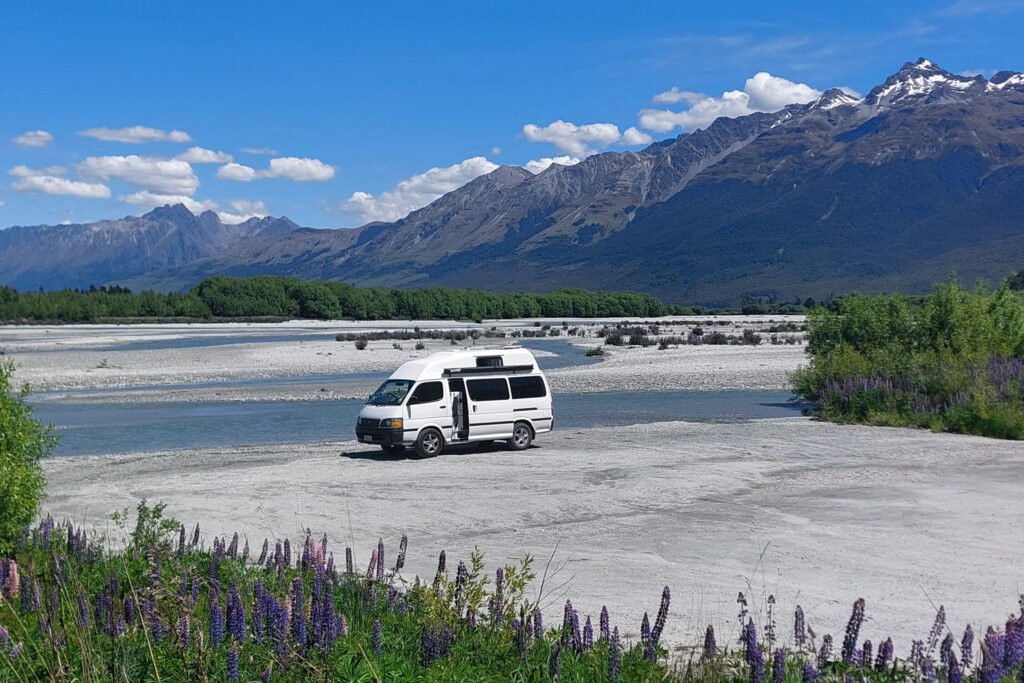
Where to Find Your Dream Campervan: Navigating the Market
The New Zealand market is seasonal. Prices peak in October/November (start of summer) and drop in April/May (end of summer). Consequently, if you arrive in spring, prepare for more competition.
Online Platforms
- Facebook Marketplace: This is where 90% of the action happens now. Look for groups like “Campervans Sales New Zealand” or “Backpacker Cars New Zealand.”
- Trade Me: The Kiwi version of eBay. It’s great for finding vans sold by locals (Kiwis) rather than just fellow backpackers. Locals often maintain their cars better!
- Backpacker Board: A dedicated website for travelers. It’s very transparent, but prices can sometimes be inflated.
The "Viewing" Strategy
Don’t buy the first van you see. Instead, try to plan 3 or 4 viewings in one or two days. This gives you a feeling for the market value and the different layouts available.
The Inspection: Protecting Your Investment
This is the most critical stage of buying a campervan in New Zealand. Never, ever buy a vehicle based on “blue eyes” or a nice interior.
Check the WOF and Rego
- WOF (Warrant of Fitness): This is a mandatory safety inspection. For older cars, you need a new WOF every 6 months; for newer ones, every 12 months. Pro tip: Always look for a van with a very recent WOF (less than a month old).
- Rego: The registration (road tax). This is easy to renew online, but make sure it hasn’t expired for more than 12 months, or the car will be de-registered.
The Pre-Purchase Inspection
We cannot stress this enough: get a professional mechanic to look at the van.
- AA (Automated Association) or VTNZ: They offer comprehensive “Pre-purchase inspections.” It costs around $160 – $200 NZD.
What they check: They look at the chassis (rust!), engine health, brakes, and suspension. In fact, during our search, we almost bought a beautiful looking van until a VTNZ inspection showed the chassis was rusted through. It would have been a $20,000 mistake!
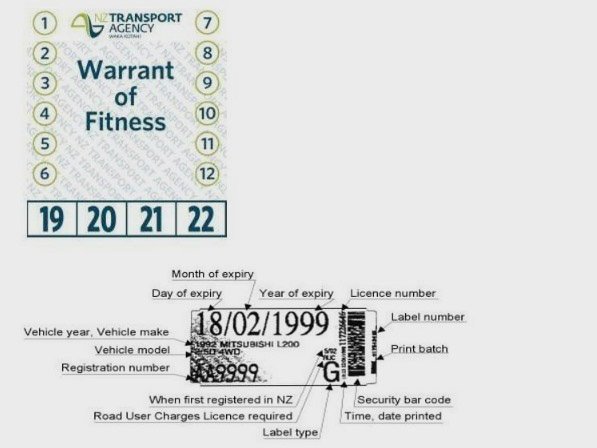
WOF and Rego
An example of a WOF sticker and a Rego.
These should be on the inside of the windscreen.
Finalizing the Purchase: Payment, Legalities, and Insurance
You’ve found the van, the inspection is green, and you’ve negotiated a price. What’s next?
The Transfer of Ownership
In New Zealand, this is incredibly simple.
- Buyer: Go to a VTNZ or PostShop, fill out form MR13B, pay about $9 NZD, and show your ID.
- Seller: They complete a “Sold” notice online. Immediately, you are the legal owner. You can even do this whole process online if you have a New Zealand driver’s license, but for most tourists, the VTNZ or PostShop is the way to go.
Payment Methods
How do you pay thousands of dollars safely?
- Wise (formerly TransferWise): This is our preferred method. It’s fast, has the best exchange rates, and is very secure.
- Bank Transfer: If you have a local NZ bank account.
- Cash: Only recommended for smaller amounts. In our situation, we bought from Dutch people and sold to Dutch people, so we could use a Dutch bank transfer, which made it very easy and fast.
Insurance: Don't Hit the Road Without It
Finally, before you drive away, you MUST have insurance. While “Third Party” is the legal minimum, we strongly recommend “Full Coverage.” We used Covi Insurance. They are specialists in motorhomes and campervans. You can fill in their form online, and usually, you’ll have your policy within a few hours. Driving stress-free is worth every cent of the premium.
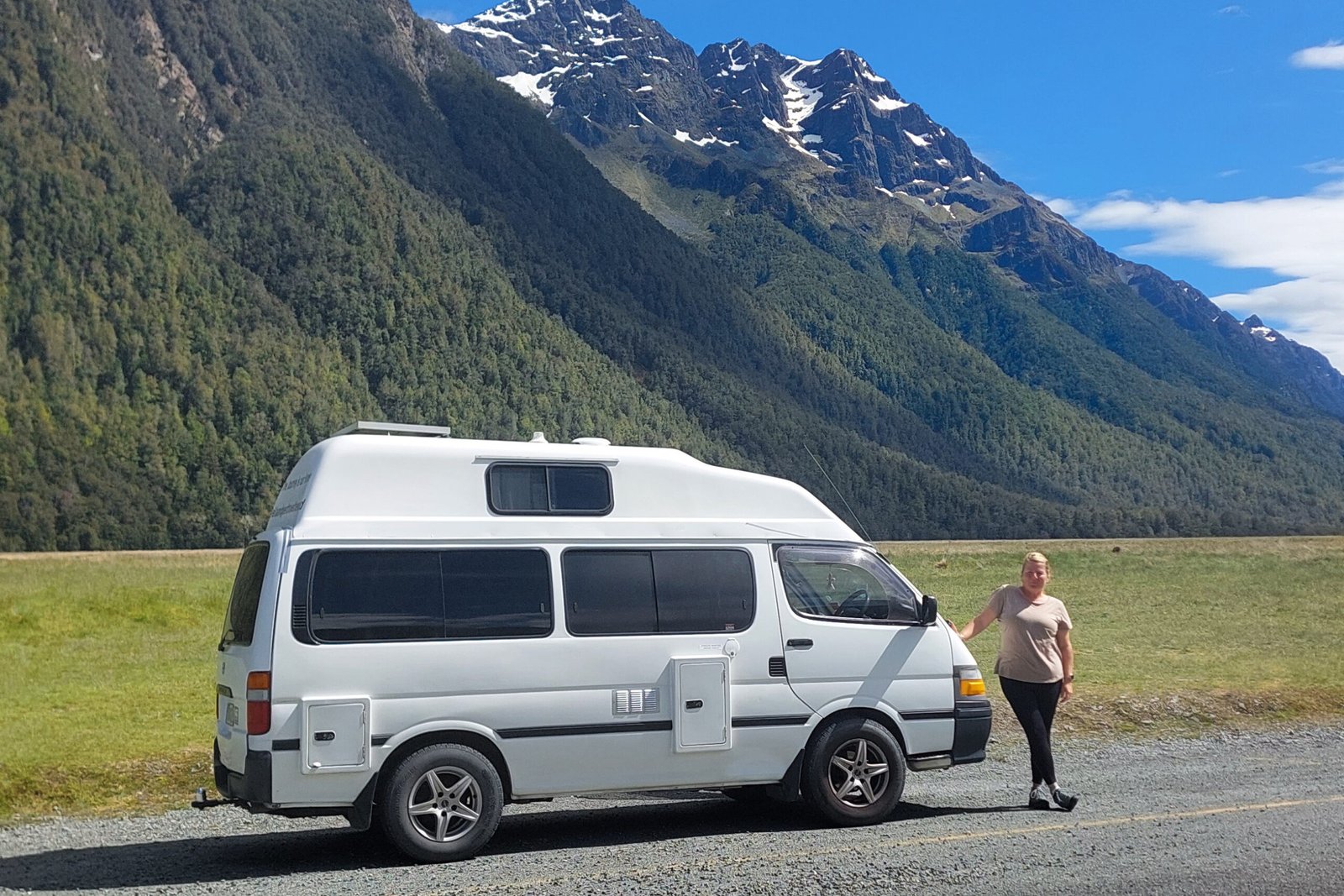
Almost ready to go
Paid? Registered? Insured?Time to hit the road and start enjoying!
Our Trusted partners for New Zealand
As experienced slow travelers, our philosophy is to embrace freedom and minimize stress on the road. New Zealand is a destination where securing your essentials beforehand can make the difference between a smooth journey and logistical or practical issues, especially when traveling with a campervan. Based on our years of living the ‘Booming Journey,’ these are your non-negotiable items we recommend to arrange before arriving. They are the keys to truly unlocking the adventure and staying connected.
Book accomodation
The widest inventory and the flexibility of free cancellation. Perfect for any accomodation in New Zealand. Book stress-free!
Get connected
The ultimate internet lifeline. Get instant data access in over 200 locations without the hassle of swapping local SIMs.
Stay connected!
Tours & Tickets
Your weapon for maximizing time!
Essential New Zealand tickets & tours, and transport passes all in one place. Skip the queues and dive straight into the fun!
Fly to New Zealand
The secret tool that compares hundreds of airlines for the best price/quality ratio. For affordable air travel, this is your starting point!
Full Transparency:
We only recommend what we truly use.
Some links in the table above are affiliate links. This means that if you click on the link and purchase the item, we will receive a small affiliate commission at absolutely no extra cost to you.
We only recommend products and services that we have personally used and trust during our own Booming Journey. Your support helps us keep exploring!
Conclusion: Your Journey Starts Here
Buying a campervan in New Zealand is the start of an incredible adventure. It gives you the freedom to wake up next to turquoise lakes, cook dinner under the Milky Way, and change your plans whenever the weather changes. The process takes time (sometimes a few days, sometimes two weeks), so don’t rush it. Be thorough with your checks, be realistic about your budget, and most importantly, listen to your gut feeling. By following the steps in this guide, you are well-prepared to make a sensible purchase that you will enjoy for months to come.
Do you have questions about our 7-month journey or specific tips for your van search? Send us a message! We love to help fellow travelers make their “Booming Journey” a reality.
The Booming Journey | 16 January 2026 | ©all rights reserved